Recently Mentioned Books
Showing 25 of 6846 mentions, ordered by most recent.

Nnedi Okorafor, Binti . Okorafor is American but born to two Nigerian parents, this science fiction novella is creative and fun to read. Ursula K. Le Guin likes her too.

Eka Kurniawan, Beauty is a Wound . It’s been called the Garcia Marquez of Indonesia, and it is one of the country’s classic novels, newly translated into English. Here is a good NYT review .

Elena Ferrante, volume four, The Story of the Lost Child . See my various posts about her series here , one of the prime literary achievements of the last twenty years.

Vendela Vida, The Diver’s Clothes Lie Empty . Fun without being trivial.

Chris Adrian and Eli Horowitz, New World , “An innovative story of love, decapitation, cryogenics, and memory by two of our most creative literary minds.”

The Seventh Day , by Yu Hua. Perhaps my favorite of all the contemporary Chinese novels I have read: “Lacking the money for a burial plot, he must roam the afterworld aimlessly, without rest.”

I found Pierre Razoux’s The Iran-Iraq War to be a highly readable and useful account, translated from the French, Harvard Belknap Press. I can’t judge the details of the substance, but I never had the feeling it was overreaching or implausible. Here is one quick excerpt, of relevance to contemporary events:

2. Mary Gaitskill by the book . I am enjoying her new novel The Mare .

That is from the new and interesting The Ottoman Endgame: War, Revolution, and the Making of the Modern Middle East, 1908-1923 , by Sean McMeekin.
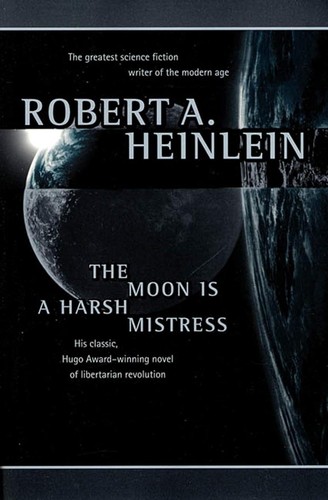
ASNESS: I could have gone with the obvious. I’m a bit of a libertarian. I could have gone with, The Moon Is A Harsh Mistress . It’s his most famously libertarian book.

ASNESS: That is a really — Methuselah’s Children .

From the Diaries , April 13th, 1930:

The book covers 1982 to 1987, the peak of Thatcher’s power and influence. Here is a rave review from Bruce Anderson , very much deserved. I am very glad I paid the extra shipping fee from Amazon.uk , you also might try ordering it here at elevated prices, very much worth it, one of the books of the year.

That is all from Michael Marmot, The Health Gap: The Challenge of an Unequal World , pp.24-25.

The new Umberto Eco novel, Numero Zero , didn’t do much for me.

Riad Sattouf, The Arab of the Future: A Childhood in the Middle East, 1978-1984 . A graphic novel set in Libya, Syria, and France, very moving and effective.

Jamie Holmes, Nonsense: The Power of Not Knowing . How to turn uncertainty and ambiguity to your advantage as a thinker, I kind of enjoyed it.

Louise O. Fresco, Hamburgers in Paradise: The Stories Behind the Food We Eat . A pro-capitalist, pro-globalization, pro-technology food book, or so it seems. I am eager to spend more time with this one.

Richard McGregor, The Party: The Secret World of China’s Communist Rulers . As Chris Blattman wrote , a very good book. In China, never underestimate the role of The Party.

Paul Murray, The Mark and the Void . He is the author of the novel Skippy Dies , which has a strong cult following, this one. Australian, snarky, deals with a financial crisis.

Paul Murray, The Mark and the Void . He is the author of the novel Skippy Dies , which has a strong cult following, this one. Australian, snarky, deals with a financial crisis.

James A. Harris, Hume: An Intellectual Biography . I quite liked and admired the parts I read, my main hesitation is that such books have to compete against…reading Hume himself. In any case many commentators seem to consider this the definitive study. If you think maybe you should read this, you should.

That is the new book by Daniel P. Todes , the first sentence is:

I am very excited to report that next week will see the publication of Hive Mind: How Your Nation’s IQ Matters So Much More Than Your Own , by my colleague Garrett Jones, with Stanford University Press. This will go down as one of the social science books of the year.

1. David Davidson and Knut Wicksell debated the natural rate of interest concept very early in the twentieth century, in Swedish I might add (see Carl Uhr’s books on Davidson and Wicksell ). Most people believe Davidson won those debates and even Wicksell seemed to concede. Whether a given rate of interest both maintains full employment and stable inflation depends on the rate of productivity growth, for one thing. It can be that no single rate of interest can perform both functions.