Recently Mentioned Books
Showing 25 of 6846 mentions, ordered by most recent.

Rana Mitter, China’s War With Japan 1937-1945 , the US edition has the sillier title Forgotten Ally . The return to knowing some background on this conflict is rising.

I liked Neil Powell, Benjamin Britten: A Life for Music and also Paul Kildea, Benjamin Britten: A Life in the Twentieth Century .

I liked Neil Powell, Benjamin Britten: A Life for Music and also Paul Kildea, Benjamin Britten: A Life in the Twentieth Century .

Lawrence Wright, Going Clear: Scientology, Hollywood, and the Prison of Belief .

I very much enjoyed this book , which also gave me an excuse to dig out old Rolling Stones albums and listen to them again (“Dear Doctor” is perhaps my favorite Stones song, an odd choice). If it were a 2013 publication this memoir would make my best books of the year list. Here is p.167:

Joseph H. Carens, The Ethics of Immigration .

William Nordhaus, The Climate Casino: Risk, Uncertainty, and Economics for a Warming World .

He is one of my favorite pianists, try his Chopin Preludes . The blog Ionarts reports :

The author is Walter A. Friedman and the Amazon link is here . It is a good and readable look at a neglected corner of the history of economic thought, covering Roger Babson, Irving Fisher, John Moody, Warren Persons, Wesley Mitchell, and others. Here is one bit:

Elizabeth Gilbert and Donna Tartt produced decent plane reads, but I wouldn’t call them favorites. The new Thomas Pynchon I could not stand more than a short sample of. I sampled many other novels but didn’t like or finish them. I read or reread a lot of Somerset Maugham, which was uniformly rewarding. The Painted Veil may not be the best one, but it is a good place to get hooked. I reread quite a bit of Edith Wharton and it rose further in my eyes. Ethan Frome and The Age of Innocence are m...

5. Kathryn Davis, Duplex: A Novel . Non-linear, not for all.

3. Amy Sackville, Orkney . Not every honeymoon works out the way you planned.

2. Claire Messud, The Woman Upstairs . Great fun.

1. Karl Knausgaard, My Struggle: Book Two: Man in Love .

The author is Cheryl Schonhardt-Bailey and that is a new book published by MIT Press. The Amazon link is here . Here is a bit from t he book’s home page :

The link is here , with review, a bargain I say, hire her! And see if they will throw in free shipping…
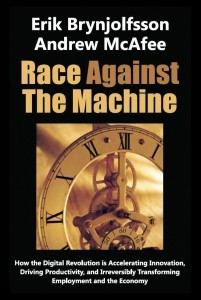
Some of you will know that Average is Over contains an extensive discussion of “freestyle chess,” where humans can use any and all tools available — most of all computers and computer programs — to play the best chess game possible. The book also notes that “man plus computer” is a stronger player than “computer alone,” at least provided the human knows what he is doing. You will find a similar claim from Brynjolfsson and McAfee .

The subtitle is Schooling Ain’t Learning , and it is excellent, as one might expect. Here is one excerpt:

That is the new book by Mark Lewisohn , and I was so keen to finish it that I neglected to see the Ender’s Game movie yesterday. 944 pp. and you only get up to 1962 and the beginnings of the first LP! Despite the length, it is gripping throughout. In addition to the obvious angles on The Beatles, it is a study of Liverpudlian history, the nature of poverty, why educating even really smart people can be problematic, why relative age matters so much for young people, how groups gel, the importa...

4. The Art of David Tudor , seven disc box set, caveat emptor on this one.

3. Klára Würtz and Kristóf Baráti, Beethoven sonatas for violin and piano .

2. Arvo Pärt, Creator Spiritus .

4. Bellini’s Norma , with Cecilia Bartoli.

3. Arvo Pärt, Adam’s Lament .

2. Haydn, The Creation , conducted by Martin Pearlman.