Recently Mentioned Books
Showing 25 of 6845 mentions, ordered by most recent.

Emily Herring, Herald of a Restless World: How Henri Bergson Brought Philosophy to the People . It is good to see more on Bergson in English. I had not known that the best man at his wedding was Marcel Proust (they were cousins by marriage and Proust was not yet famous). Still, the book did not convince me that I have been underrating Bergson.

Rose Lane Says: Thoughts on Race, Liberty, and Equality, 1942-1945 . A hitherto little-known corner of libertarian thought, these short essays are very good and could be a useful tonic for some of what has gone wrong. Edited by David T. Beito and Marcus Witcher.

Africa: the Definitive Visual History of a Continent , Penguin Random House. One of my favorite picture books of all time. It teaches the broader history of Africa by region rather than by country. First-rate maps and photos throughout.

Emily Nussbaum, Cue the Sun! The Invention of Reality TV . Despite its excellent reviews, I resisted buying this book for a while, because most books on TV are not good. It is intrinsically difficult to write about the medium, and also many of the people who want to just aren’t that smart. But the Nussbaum book is a true winner, the Candid Camera chapter alone makes it worth it. Did you know that Richard Lewis was on the show at age 16? Recommended, both for its entertainment and its substan...

Here is Joe’s official website . Joe has a new and remarkably thorough and polymathic book out And the Roots of Rhythm Remain: A Journey Through Global Music . So what should I ask Joe?

That is from the new and very good book Martin van Buren: America’s First Politician , by James M. Bradley. Later things were different:

By A.N. Wilson, an excellent book and worthy of being addended to the year’s best non-fiction list . In addition to appreciating the work of Goethe, which one can never do enough of, Wilson argues (with reasonable evidence) that Goethe was bisexual, including with Jacobi (!). Goethe also had, at the very least, alcoholic tendencies, at times drinking three bottles a day for extended periods of time.

1. FT lunch with Abhijit Banerjee . And his new book .

The author is David A. Stockman, and the subtitle is Why the Reagan Revolution Failed . This is for me a re-read, all DOGErs and aspiring DOGErs should give this book an initial read, as it covers why the Reagan attempts to pare back government largely failed. Excerpt:

The author is Bartle Bull, and the subtitle is A 5,000-Year History of Iraq . Excerpt:

I also very much enjoyed my read through the letters of Paul Celan and Ingeborg Bachmann . You can feel all the different stages of their relationship, without even necessarily knowing how the story develops. Max Frisch and Nelly Sachs make cameo appearances. The highlight perhaps is when she writes him a lengthy letter about how he is the one who is actually complicated and unhappy (and not she), and then decides not to send it.

There is a new translation by Joseph Luzzi, and I find it an order of magnitude better than the older treatments. It somehow communicates the strangeness of this work in a new and unprecedented way. You can order it here .

You can order the book here . How is it that Weber — the author of numerous fine books on modernist art — does not have a Wikipedia page of his own?

Uncle Rabbit & the Wax Doll , edited by Jonathan Amith, illustrations by Inocencio Jiménez Chino , a very good and beautiful children’s book, also in Nahuatl and Spanish.

Emily Van Duyne, Loving Sylvia Plath: A Reclamation . I don’t feel this book is what I need at the margin, but it is a very good and engaging addition to the canon surrounding Plath.

Ola Olsson, Paleoeconomics: Climate Change and Economic Development in Prehistory surveys plenty of information about what the subtitle suggests. I found the material difficult to evaluate, and so only read part of this one. Nonetheless I suspect it is the best book on its topic.

Caroline Potter, Pierre Boulez: Organised Delirium . An excellent work, explores the deep links between Boulez’s music and French surrealism (and to a lesser degree expressionism). One of the best books for understanding Boulez and indeed serialism more generally. Is serialism is most misunderstood musical movement to this day?

Sohrab Sardashti, Iranian Architecture:A Visual History . One of the very best picture books, both for intrinsic reasons and because many of us cannot expect to see these landmarks anytime soon if at all.

Gina Consing McAdam and Siobhan Doran, Houses that Sugar Built: An Intimate Portrait of Philippine Ancestral Homes . An excellent picture book, these are art traditions, and bits of history, you otherwise never would see.

John Ma, Polis: A New History of the Ancient Greek City-State from the Early Iron Age to the End of Antiquity . I didn’t read much of this book, mostly because it is too good for me to understand just how good it is. Que triste! It is like those GPT “advanced reasoning” answers that also can be too good to digest fully. A small number of you, however, should read this book very carefully and perhaps you already have.

That is the new book by Marty Makary . Since Makary has been nominated to head the FDA, I am surprised this work is not receiving more attention.
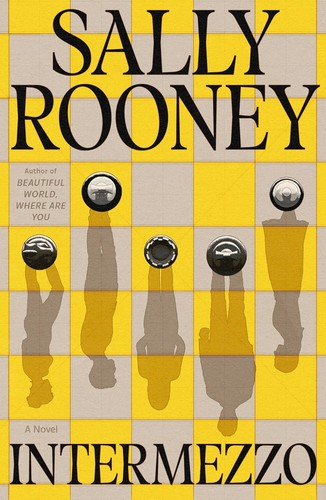
Sally Rooney, Intermezzo . Here is a good Henry Oliver review .

Guadalupe Nettel, La hija única , or Still Born

Richard Flanagan, Question Seven .

Karen Jennings, Crooked Seeds .