Recently Mentioned Books
Showing 25 of 6845 mentions, ordered by most recent.

5. Katherine Eban, Bottle of Lies: The Inside Story of the Generic Drug Boom . A “worth reading” look at what the title promises, but all the best parts are about how the FDA tries to regulate generic drug production in India.

4. Chris Miller, The Struggle to Save the Soviet Economy: Mikhail Gorbachev and the Collapse of the Soviet Economy . One of the best books on the beginnings of the reform era, with a special focus on whether the Soviets could have chosen a Chinese path (no, too many embedded interest groups, so does that mean Mao is underrated?).

3. Jim Auchmutey, Smokelore: A Short History of Barbecue in America is the most current of the best histories of barbecue and it is more bullish on the barbecue future than most treatments.

2. Tobias Straumann, 1931: Debt, Crisis, and the Rise of Hitler covers a critical episode in European history, and one which has not entirely faded into irrelevance. The author is a financial historian rather than an economist, so think of this book as scratching your history itch, in any case recommended.

1. Christopher Tyerman, The World of the Crusades: An Illustrated History . The best and most engrossing history of the crusades I have read. By the way, the “children’s crusade” probably didn’t have that much to do with children. The periodic topic-specific two-page interludes are especially good.

The author is Walter Scheidel and the subtitle is The Failure of Empire and the Road to Prosperity . Imagine a whole book on what he calls “the second Great Divergence,” namely that China developed a large, relatively unified hegemonic state early on, while Europe remained (mostly) politically fragmented.

You can pre-order the book here , I would be interested to read more about Bryson’s work, writing, and research habits.
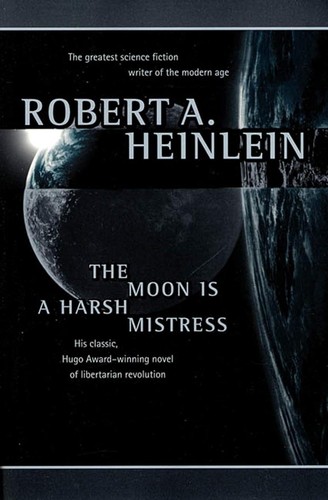
COWEN: Is there any Heinlein-esque-like scenario — Moon is a Harsh Mistress , where there’s a rebellion? People break free from the constraints of planet Earth. They chart their own institutions. It becomes like the settlements in the New World were.

If you want to speculate on the development of tech, no one has a better brain to pick than Neal Stephenson. Across more than a dozen books, he’s created vast story worlds driven by futuristic technologies that have both prophesied and even provoked real-world progress in crypto, social networks, and the creation of the web itself. Though Stephenson insists he’s more often wrong than right, his technical sharpness has even led to a half-joking suggestion that he might be Satoshi Nakamoto, the sh...

Those bits are from this (uneven) volume .
2. “ The decline in liquor tax revenue caused by the anti-alcohol campaign [in the USSR] was of the same magnitude as the decline in oil export revenue. ”

The slightly misleading subtitle is How Rogue Chemists are Creating the Deadliest Wave of the Opioid Epidemic . Why misleading? So many substance abuse books are a mix of hysterical in tone and a disappointing “paint by numbers” in their execution, but this one really stands out for its research, journalism, and overall analysis. To give just one example, it is also a great book on China, and how China and the Chinese chemicals industry works, backed up by extensive original investigation.

You can pre-order here .

Interesting and excellent throughout, here is the audio and transcript . Eric is political scientist at Birkbeck College in London and the author of the recent Whiteshift: Populism, Immigration, and the Future of White Majorities . Here is part of the opening summary:

You can order the book here .

I am never quite sure how to evaluate graphic novels with non-fiction content, but the creators of this one do indeed deliver what you might be expecting from it. You can pre-order here .

A new and considerably updated edition of the classic Land of Plenty . For my money, one of the best and most valuable books ever produced. Pre-order here . And here is my Conversation with Fuchsia Dunlop .

Here is more by Elliott Njus , via Jan Fure and several other MR readers. Next up perhaps is this …

Recommended, you can buy the book here .

Eric Nelson, The Theology of Liberalism: Political Philosophy and the Justice of God is an interesting look at Pelagianism and related free will ideas as the possible origin for classical liberal ideas. But is free will so important? Isn’t there a Hayekian/Calvinist/Straussian case for the limits of political power? Do the Pelagian roots of liberalism collapse more into current progressivism? In any case I found this book both readable and stimulating, the discussion of the early theology of...

Adam Minter, Secondhand: Travels in the New Global Garage Sale delivers exactly what readers of Adam’s previous work would and should expect. I am a big Adam Minter fan.

Sarah L. Quinn, American Bonds: How Credit Markets Shaped a Nation . Less broad than the title suggests, this is still a clear and useful history of some parts of American securitization, starting with such (important) oddities as the Federal Farm Loan Act of 1916.

I’ve only browsed Owen Matthews, An Impeccable Spy: Richard Sorge, Stalin’s Master Agent , but it seems to be based on a remarkable amount of original research. I do not care so much about the history of spying, but for some of you this should be a very good book.

Gabriel García Marquez, The Scandal of the Century, and Other Writings . His early journalistic pieces are a revelation, both for their connections to a Borges-Cortázar style, and for how they show the roots of his later more literary productions. His best-known work is perhaps overrated, but his body of work as a whole is still considerably underrated, and this volume will add to your appreciation of him.

Swapan Dasgupta, Awakening Bharat Mata: The Political Beliefs of the Indian Right . What do those people actually believe and why? A summary and also a collection of original texts, strongly recommended for insight into one of the world’s most important nations and thus one of the world’s most important intellectual movements.